As a windsurfer, I thought winging would feel pretty familiar. I already understood wind direction, sheeting, apparent wind, board trim, and the usual rule…
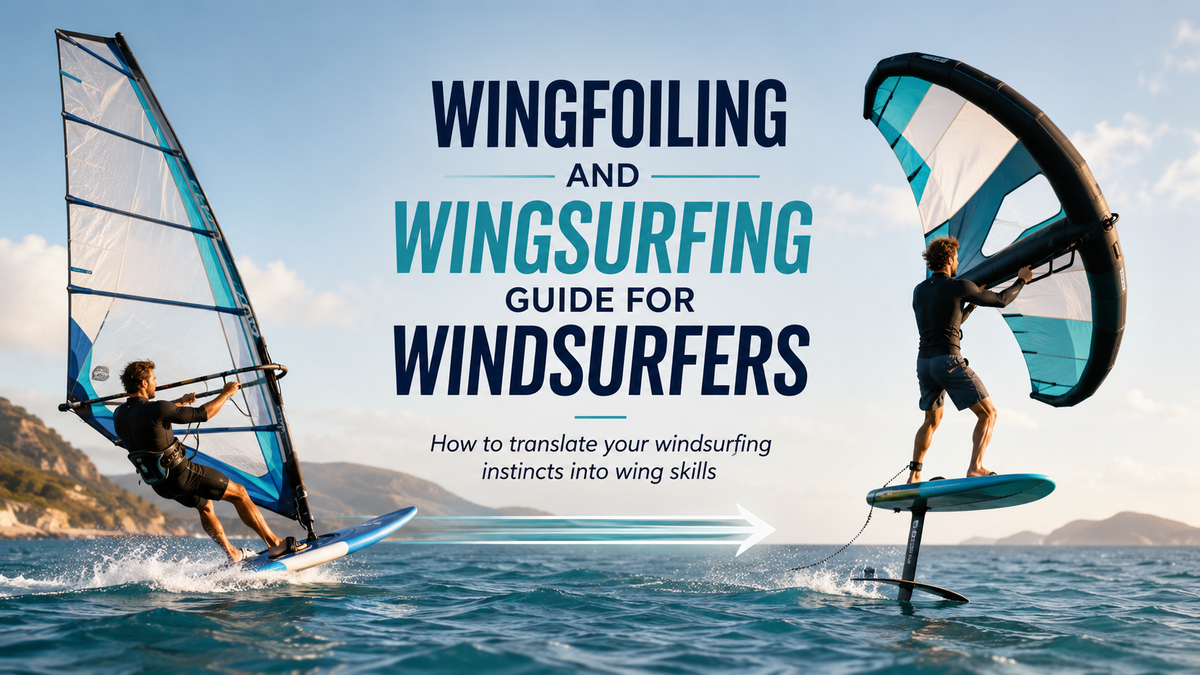
As a windsurfer, I thought winging would feel pretty familiar.
I already understood wind direction, sheeting, apparent wind, board trim, and the usual rule that stiff legs make everything worse. So when I first picked up a wing, I assumed most of the learning curve would be about handling a new sail.
I was wrong.
Windsurfing definitely helps. It gives you a big head start. But winging is not just windsurfing without a mast. The wing is not attached to the board. There is no mast-foot pressure. And once you add a foil, your feet are no longer trimming a planing board — they are controlling lift, pitch, and height.
That was the real adjustment for me.
The wind knowledge transferred. Some of the instincts transferred. But a few habits had to be completely rewritten.
The hardest thing for me to stop looking for was mast-foot pressure.
In windsurfing, the mast base does a lot of invisible work. It connects the rig to the board. It helps settle the nose, load the rail, control trim, and turn sail power into board pressure.
With a wing, that connection is gone.
The wing pulls you first. Then you transfer that force into the board through your body and feet. You are the missing link between the wing and the board.
That sounds obvious, but it changes everything.
If you lean forward and hang on the wing, the board does not magically receive clean downward pressure through a mast base. You just get pulled out of position.
If you sheet in too hard, you are not loading a fin the way you would on a windsurf board. Most of the time, you are just stalling the wing, dropping a wingtip, or dragging yourself downwind.
The wing has to fly cleanly before it can pull properly.
That was probably the first lesson that really clicked.
At first, I treated the wing too much like a windsurf sail.
The back hand felt familiar: pull in for power, ease out to depower. That part makes sense.
But the front hand is where I had to pay more attention. It is not just a mast hand. It controls the height of the leading edge, the angle of the wing, and whether the wing is flying cleanly or trying to dive into the water.
The simple cue that helped me was:
Front hand flies the wing. Back hand adds power.
Not “back hand pulls as hard as possible.”
That was my early mistake. As windsurfers, we are used to sheeting in and driving against something: fin, rail, mast foot, harness line. With a wing, especially at low speed, pulling harder often makes everything worse.
If the wing feels heavy, the answer is usually not more back hand.
It is usually:
Raise the front hand.
Ease the back hand.
Let the wing breathe.
Then add power again.
I started thinking of the back hand as a throttle, not a winch.
One of the strangest surprises was how heavy the wing could feel.
It was not actually the weight of the wing. Most of the time, I was just flying it badly.
The wing felt heavy when I held it too low.
It felt heavy when I pulled too much back hand.
It felt heavy when the wingtip got close to the water.
It felt heavy when I tried to point upwind before I had speed.
It felt heavy when I bent at the waist and let the wing drag me around.
On a SUP, there was another reason: drift.
A normal SUP with only a tail fin does not resist sideways drift like a windsurf board with a daggerboard or a proper center fin. So if you sheet in hard, the board may simply slide sideways. That can make you feel as if your technique is terrible, when actually the board just has very little side resistance.
A center fin, daggerboard, or proper beginner wing board makes the early stage much easier. It gives the board something to push against.
Without that, you spend a lot of energy fighting leeway instead of learning the wing.
I still think wingsurfing on a big board is useful, especially if you have no foil experience.
A large SUP, windsurf board, or beginner wing board lets you learn the wing without also trying to control foil pitch. You can practise starting from your knees, standing up, sailing across the wind, stopping, turning around, and getting back close to where you launched.
That is valuable.
But I would not treat it as a fixed rule for everyone.
If you already have windfoil, surf foil, kite foil, or strong board-control experience, you may not need to spend a long time on a non-foil board. You can move into foil taxi runs and short flights sooner, as long as the conditions and equipment are forgiving.
For me, the point of wingsurfing was not to “master” it. It was to remove one variable.
Learn the wing first.
Then add the foil.
That is much calmer than trying to learn both at once.
This was another place where my windsurfing instinct got in the way.
I wanted to start with the wing already in a powered beam-reach position, like I would with a windsurf sail. But with a handheld wing, that often puts the lower wingtip straight into the water.
What worked better was starting with the wing high and neutral, almost like an umbrella above me.
But only at the beginning.
The goal is not to sail around forever with the wing directly overhead. That position is stable, but it does not create much forward drive. Once the wing is flying cleanly and the board is settled, you need to bring it gradually into the power window.
My better starting sequence became simple:
Start on my knees near the middle of the board.
Point the board across the wind or slightly downwind.
Let the wing fly high and light first.
Put the front hand on the front handle.
Add the back hand gently.
Bring the wing forward and slightly down into power.
Let the board move before standing fully.
That last part matters.
Do not try to stand up, sheet in, point upwind, and accelerate all at once. It turns messy fast.
First fly the wing.
Then add power.
Then stand.
Then sail.
On a windsurf board, once things start moving, stepping back often feels natural. You release the nose, load the fin, and get the board planing properly.
That habit can cause problems in winging.
On a SUP or beginner wing board, stepping too far back just sinks the tail and makes the board sticky. Standing too far forward makes the nose plow. The board usually wants to stay flatter than a planing windsurf board.
A good starting point is around the balance point of the board, often near the carry handle or slightly behind it.
I started using the board’s sound and feel as feedback.
If the nose was pushing water, I moved slightly back.
If the tail was dragging, I moved slightly forward.
If the board felt quiet and flat, I stayed there.
In early wingsurfing, I also found it easier to stay closer to the centerline than I would on a powered windsurf board. You are not loading footstraps and a fin yet. You are just trying to keep the platform stable.
Once you move to wingfoiling, foot position becomes more specific. It depends on foil size, mast position, board volume, straps, and riding style. So “stand on the centerline” is really an early-stage tip, not a permanent rule.
Windsurfers already understand pumping, so it is tempting to bring that habit straight across.
Some of it helps. Some of it does not.
On a SUP without a foil, wing pumping can help you build speed. But bouncing the board up and down does not do much. There is no foil underneath to turn that movement into lift. Most of the time, it just makes the board unstable and slow.
On a foil board, pumping matters much more — but only when there is already enough forward speed.
The mistake is trying to force the foil up from nothing.
A good pump is not just yanking the back hand. It is a coordinated movement: the wing creates forward pull, the body stays balanced, and the legs help the foil rise when the speed is there.
The cue I like is:
Speed first. Lift second. Angle last.
If I tried to pump before the board was moving, I just made noise and drag. If I bore away slightly, built speed, kept the wing flying cleanly, and then added a small leg pump, the foil came up much more naturally.
The foil stage is where windsurfing habits can really bite you.
On a windsurf board, stepping back helps release the board. On a foil board, stepping back changes the foil’s angle of attack. Too much back-foot pressure can send the nose up fast, make the foil climb too high, breach, or stall.
So I had to stop thinking “get on the plane.”
A foil does not plane. It lifts.
The better mindset was:
Build speed with the board flat.
Let the foil start to release.
Use front-foot pressure to control height.
The front foot is not passive. It is your altitude control.
If the foil rises too high, add front-foot pressure.
If the board has speed but still feels stuck, use a tiny bit of back-foot pressure or a small pump.
But do not stomp.
Most failed takeoffs are not fixed by more back foot. They are fixed by cleaner wing power, more forward speed, and better board trim.
That was a huge difference from windsurfing.
A lot of my early problems were really posture problems.
The worst position was the folded one: bent at the waist, shoulders forward, arms too close, hips behind me, wing pulling me downwind.
It felt strong for about two seconds. Then everything got heavy.
The better stance felt more stacked and springy:
Knees bent.
Hips under me.
Chest open.
Arms relaxed but extended.
Wing away from the body.
Weight centered over the board.
I had to feel like a spring between the wing and the board, not like I was hanging from the wing.
That is different from being locked into a windsurf harness stance. In early winging, you need to stay mobile. You are constantly adjusting the wing, the board, and your feet.
The more relaxed I became, the lighter the wing felt.
This one was hard because windsurfers naturally want to climb upwind.
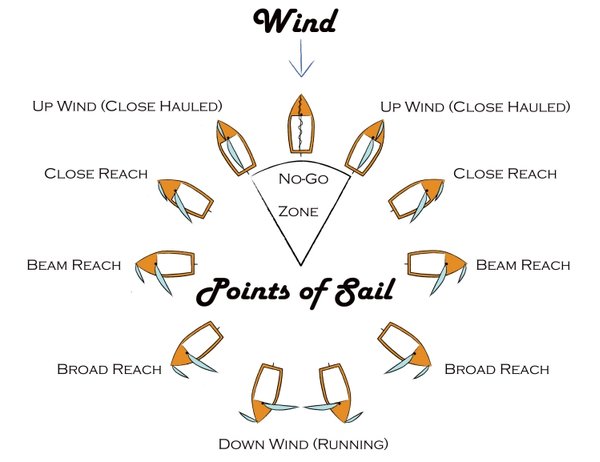
But in winging, pointing too high too soon kills speed. Then the wing feels heavy, the board slows down, and everything becomes harder.
The better move is to bear away slightly, build speed, and only then start climbing.
On a SUP, your upwind ability depends heavily on the board. A board with a center fin or daggerboard behaves very differently from a normal flat SUP with only a tail fin.
On foil, upwind becomes much easier once you are flying. Drag drops, the foil becomes efficient, and the wing does not need to be muscled so much.
But the order stays the same:
Build speed first.
Get stable.
Then ask for angle.
When things felt heavy, I learned to stop fighting upwind and bear away for a few seconds. Almost every time, the whole system reset.
At low speed on a big board, steering still feels somewhat familiar.
Move the wing forward and the board tends to bear away. Move it back and the board tends to head up. Shift weight and the board responds slowly.
But once you are on foil, everything becomes smaller.
The foil rolls under your feet. Small heel or toe pressure changes direction. Small front-foot or back-foot pressure changes height. Big windsurf-style movements are usually too much.
That was another thing I had to unlearn.
A windsurf board can handle strong, committed movements. A foil prefers small corrections.
You do not bully the foil.
You guide it.
Windsurfing water sense helps a lot, but foil adds a few extra risks.
Before going out, I now think about three questions:
Where will the wind take me if something breaks?
Is the water deep enough for the foil?
Can I get back if the wind drops?
If I cannot answer those, I should not be launching.
For early sessions, side-shore or side-onshore wind, flat water, and plenty of downwind space make life much easier. Offshore wind is not worth it unless there is proper rescue support.
For wingfoiling, depth and obstacles matter more than they do in normal windsurfing. Sandbars, rocks, swimmers, moorings, and weed beds all become more serious when there is a foil under the board.
I also would not skip the basics: board leash, wing leash, helmet or impact vest when conditions call for it, and a habit of falling away from the foil.
A loose wing disappears fast.
A loose board can be dangerous.
A foil is not something you want to land on.
The more I practised, the clearer the pattern became.
Windsurfing helped me read the wind, choose angles, understand gusts, and stay balanced on a board. That was a big advantage.
But the mistakes also came from windsurfing.
I kept looking for mast-foot pressure.
I pulled too much back hand.
I tried to point upwind too early.
I stepped back too soon.
I tried to force the foil up instead of letting speed create lift.
Once I softened those habits, winging became much easier.
The wing felt lighter.
The board moved more freely.
The foil lifted with less drama.
The biggest change was mental: I stopped trying to make the wing behave like a windsurf rig.
Windsurfing gave me the map, but winging used a different vehicle.
And when it finally clicked, it did not feel like planing.
It felt like flying.